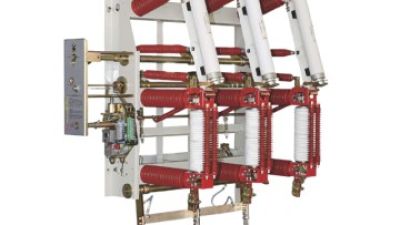
In today's fast-changing world of power protection, Vacuum Circuit Breakers (VCBs) are really starting to stand out. Industry experts like John Smith from PowerTech Solutions often point out that, "VCBs provide a level of reliability that traditional breakers just can't match." Honestly, this really pushes businesses to consider upgrading to more advanced options like VCBs to keep their operations safe and running smoothly.
The design of VCBs is pretty interesting, actually. They work by cutting off current flow in a vacuum, which helps reduce arcing and makes them last longer. But here’s the thing: a lot of companies tend to forget that regular maintenance is super important. Skipping those check-ups can lead to unexpected breakdowns and costly downtime – nobody wants that. Sure, VCBs promise efficiency, but they also need a bit of TLC to stay in top shape.
Choosing the right VCB isn’t always straightforward. It’s a balancing act between performance and the practical challenges, especially since not every model fits every type of business. Sometimes, the options can feel a little overwhelming. It’s really important to understand the specs and match them up with your actual needs. As technology keeps evolving, making informed decisions about VCBs can actually make or break the reliability of your entire power system.
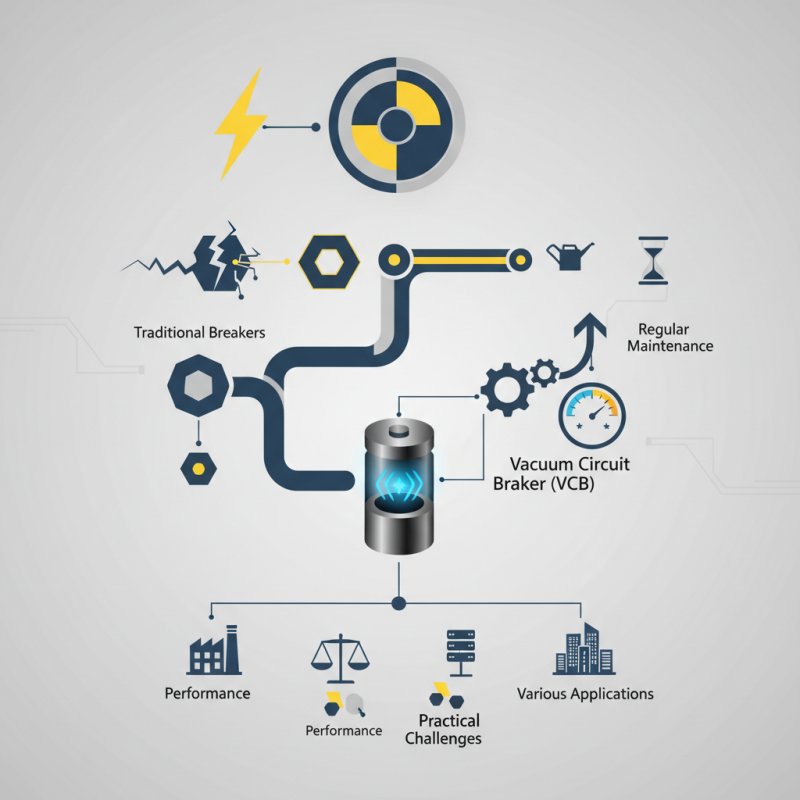
Understanding Vacuum Circuit Breakers: Principles and Functionality
Vacuum circuit breakers (VCBs) are essential for electrical power protection. They operate on the principle of using a vacuum environment to extinguish the arc formed during fault conditions. When the circuit breaks, the contacts separate, creating an arc. The vacuum quickly cools, eliminating the arc.
The functionality of VCBs lies in their unique design. They consist of two main components: a vacuum chamber and contact assemblies. The vacuum chamber is sealed to prevent air intrusion. This design improves the reliability and efficiency of the circuit breaker. Maintenance requirements are minimized due to the absence of gases.
However, VCBs are not without challenges. Limited operating mechanisms can impact performance in specific situations. They may require precise calibration for optimal functioning. Some users may find the technology complex, needing better understanding. Proper training and knowledge are crucial. Without it, there's a risk of mishandling or faults.
Key Features to Consider in Reliable Vacuum Circuit Breakers
When choosing vacuum circuit breakers, reliability is key. Look for design features that enhance performance. Compact size is important. A smaller footprint means easier installation. Additionally, insulation material affects durability. Quality materials resist wear and tear over time.
Consider the rated voltage and interrupting capacity. Ensure the breaker fits the specific application requirements. This affects the safety and effectiveness of the system. Don't overlook operational temperature ranges. Breakers need to function in diverse conditions without failure.
Tips: Always check for compliance with local standards. This adds a layer of security in case of inspections. Also, user reviews can highlight potential issues or strengths.
In the context of Vs1 Indoor High Voltage Vacuum Circuit Breakers, understanding environmental adaptability is crucial. Look for products that demonstrate resilience in various settings. This will assure consistent performance when it matters most.
Top Brands and Models of Vacuum Circuit Breakers in the Market
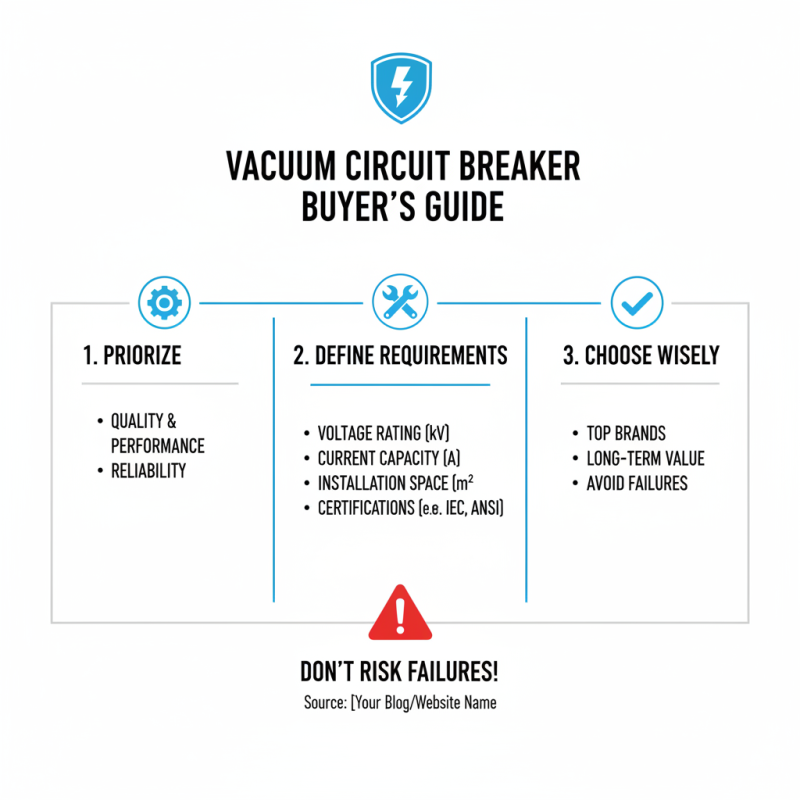
When searching for reliable vacuum circuit breakers, focusing on quality and performance is essential. The market offers various models from different brands. You should identify your specific requirements. This includes voltage ratings, current capacities, and installation space. Many options are available, but choosing the wrong one can lead to failures.
Some popular vacuum circuit breakers deliver exceptional protection. However, not all models perform equally well. Consider your local environment. Dust and moisture can affect the longevity of Breakers Circuit. Always check the specifications carefully. Installation and maintenance are equally vital. Look for a design that allows easy access for regular checks.
Tip: Ensure to review the maintenance manual during installation. Proper maintenance can prolong the life of your circuit breaker. Also, test the devices periodically. This will help in identifying issues early. Last, seek feedback from experienced users. Their insights can guide you in selecting the best option for your needs.
Applications of Vacuum Circuit Breakers in Power Protection Systems
Vacuum circuit breakers (VCBs) play a crucial role in power protection systems. They are known for their reliability and efficiency. In various applications, VCBs provide necessary safety against electrical faults. According to industry data, the global demand for VCBs is expected to grow by 7% annually. This reflects their importance in modern electrical infrastructure.
Hv Vacuum Circuit Breakers are particularly effective in high-voltage settings. They prevent arc formation during the interruption of electrical circuits. This capability significantly reduces the risk of fire hazards. VCBs also maintain a compact design, which saves space in substations. However, the lifespan of a VCB can decline if not maintained properly. Improper maintenance may lead to catastrophic failures during operation.
In industrial applications, VCBs are used for transformer protection and motor control. These breakers ensure that machinery operates safely and efficiently. The ability to isolate faults quickly helps in minimizing downtime. Nevertheless, some engineers question the reliability of VCBs under extreme conditions. Research suggests that performance can be affected by temperature and humidity. It's essential to consider these factors when implementing Hv Vacuum Circuit Breakers in power protection systems.
Installation and Maintenance Best Practices for Vacuum Circuit Breakers
Vacuum circuit breakers (VCBs) play a crucial role in power protection. Their installation requires careful planning and execution. First, ensure the installation area is clean and dry. Proper alignment is key. Make sure all connections are secure and that there are no loose parts. This can prevent future malfunctions.
During installation, it's beneficial to follow the manufacturer’s guidelines closely. Skipping steps might seem minor, but it can lead to issues later. Check the insulation levels. They should meet specific standards to ensure safe operation. Consider using thermal imaging tools to inspect connections for hot spots after installation. This can help identify issues before they escalate.
Maintenance is equally important. Regular inspections should be scheduled. A simple visual check can reveal a lot—look for signs of wear or corrosion. Keep the circuit breaker mechanism clean and free of dust. Use compressed air for a quick clean. Remember, neglecting maintenance can lead to equipment failure. Document every inspection and change made. This provides a useful history, making the next maintenance round easier. Each step counts in maintaining operational reliability.
Comparative Analysis of Vacuum Circuit Breakers vs. Other Types
When comparing vacuum circuit breakers to other types, the main advantages come into focus. Vacuum circuit breakers (VCBs) excel at interrupting electrical arcs. This capability comes from the vacuum environment that quickly extinguishes arcs. In contrast, air and oil circuit breakers rely heavily on the surrounding medium and can be less efficient. The switching times for VCBs are often notably quicker. This rapid response time is vital in protecting equipment from faults.
However, vacuum circuit breakers are not without their flaws. Their installation can be complex and sometimes requires specialized skills. Maintenance might also be overlooked, resulting in reduced longevity. Unlike air-insulated circuit breakers, VCBs can suffer from wear and tear over time if not monitored properly. Furthermore, while VCBs have lower maintenance needs, the need for occasional inspections remains.
The effectiveness of VCBs can also be context-specific. In environments with high levels of dust or moisture, the performance could be affected. While their capability is impressive, one must also consider the operational environment. This brings about critical questions regarding their deployment and ongoing performance. Balancing these factors is essential for optimal power protection.
Best Vacuum Circuit Breakers for Reliable Power Protection
| Feature | Vacuum Circuit Breakers | Oil Circuit Breakers | Air Circuit Breakers |
| Operating Principle | Uses vacuum as the medium for arc quenching | Uses oil as the arc extinction medium | Uses air as the arc extinction medium |
| Maintenance Requirements | Low maintenance | Requires regular oil checks | Requires more frequent maintenance |
| Installation Space | Compact design | Requires more space due to oil tank | Moderate space requirement |
| Cost | Moderate to high initial cost | Lower initial cost | Higher initial cost |
| Durability | High durability and reliability | Durable but affected by oil condition | Less durable in harsh conditions |
Future Trends in Vacuum Circuit Breaker Technology and Innovations
Vacuum circuit breakers are evolving rapidly. New technologies are emerging to enhance their performance. Innovations focus on improving efficiency and reliability. An exciting trend is the integration of smart technologies. These allow for real-time monitoring and data analysis.
In future designs, the 40.5kv Vacuum Circuit Breaker will likely play a significant role. This voltage level is crucial for various industrial applications. With enhanced materials and advanced mechanics, these breakers will become more durable. However, there is still room for improvement. Manufacturers must ensure that these innovations do not compromise safety.
Sustainability is another vital aspect. Future vacuum circuit breakers may use eco-friendly materials. This shift can reduce the environmental impact. However, challenges remain. Balancing performance and sustainability is not easy. Continued innovation is necessary to meet these challenges head-on. The industry's future relies on adapting to new demands.
Market Analysis and Future Trends of Indoor High Voltage Vacuum Load Switches: Insights from Recent Industry Reports (FZN21-40.5 Model)
The market for indoor high voltage vacuum load switches, particularly the FZN21-40.5 model, is witnessing significant growth driven by an increasing demand for reliable and efficient power distribution solutions. These switches are primarily designed for three-phase AC systems operating at 40.5kV and 50Hz, making them integral to various applications such as wind power generation, power network construction, industrial facilities, and public infrastructure projects. Their versatility extends to use in ring network switch cabinets and combined AC power stations, highlighting their importance in modern electrical systems.
One of the standout features of the FZN21-40.5 model is its ability to manage high electrical loads with a strong breaking capacity, ensuring safety and reliability in operation. These switches are engineered for long electrical life, frequent operation, and minimal maintenance, making them a preferred choice in environments where durability and efficiency are paramount. Equipped with advanced capabilities such as a clearly visible isolation break, grounding switch, and remote control functions, this model not only protects electrical equipment but also facilitates seamless control over power distribution operations. The shift towards renewable energy and infrastructure upgrades is expected to further fuel the demand for such high-performance vacuum load switches in the years to come.
FAQS
: The service aims to provide users with helpful resources and information.
You can access resources through the official website or app.
Most resources are free, but some premium features may require payment.
Users can find articles, videos, and interactive tools.
Yes, users can submit their content for review and potential publication.
Reach out to customer support to report issues. They will assist you.
Yes, submissions should not contain prohibited materials or personal attacks.
Content is regularly reviewed and updated to ensure accuracy.
Yes, the service is compatible with most smartphones and tablets.
Check the FAQ section or contact support for assistance.
Conclusion
Vacuum Circuit Breakers (VCBs) are crucial components in modern power protection systems, offering reliable functionality through their unique operational principles. These devices utilize a vacuum environment to extinguish electrical arcs, resulting in minimal energy loss and enhanced durability. When selecting VCBs, key features such as breaking capacity, insulation performance, and maintenance requirements should be considered to ensure optimal reliability and efficiency.
The applications of Vacuum Circuit Breakers span various industries, making them essential for safeguarding electrical infrastructure. Proper installation and maintenance practices are vital for maximizing their lifespan and operational integrity. Furthermore, a comparative analysis of VCBs against other circuit breaker types reveals their advantages in terms of compact size and performance. As technology evolves, future trends in VCB technology emphasize innovations that improve efficiency and adaptability in power protection systems, solidifying their importance in the electrical engineering landscape.